A neighbor has no legal right to demand that you sell the property to them first
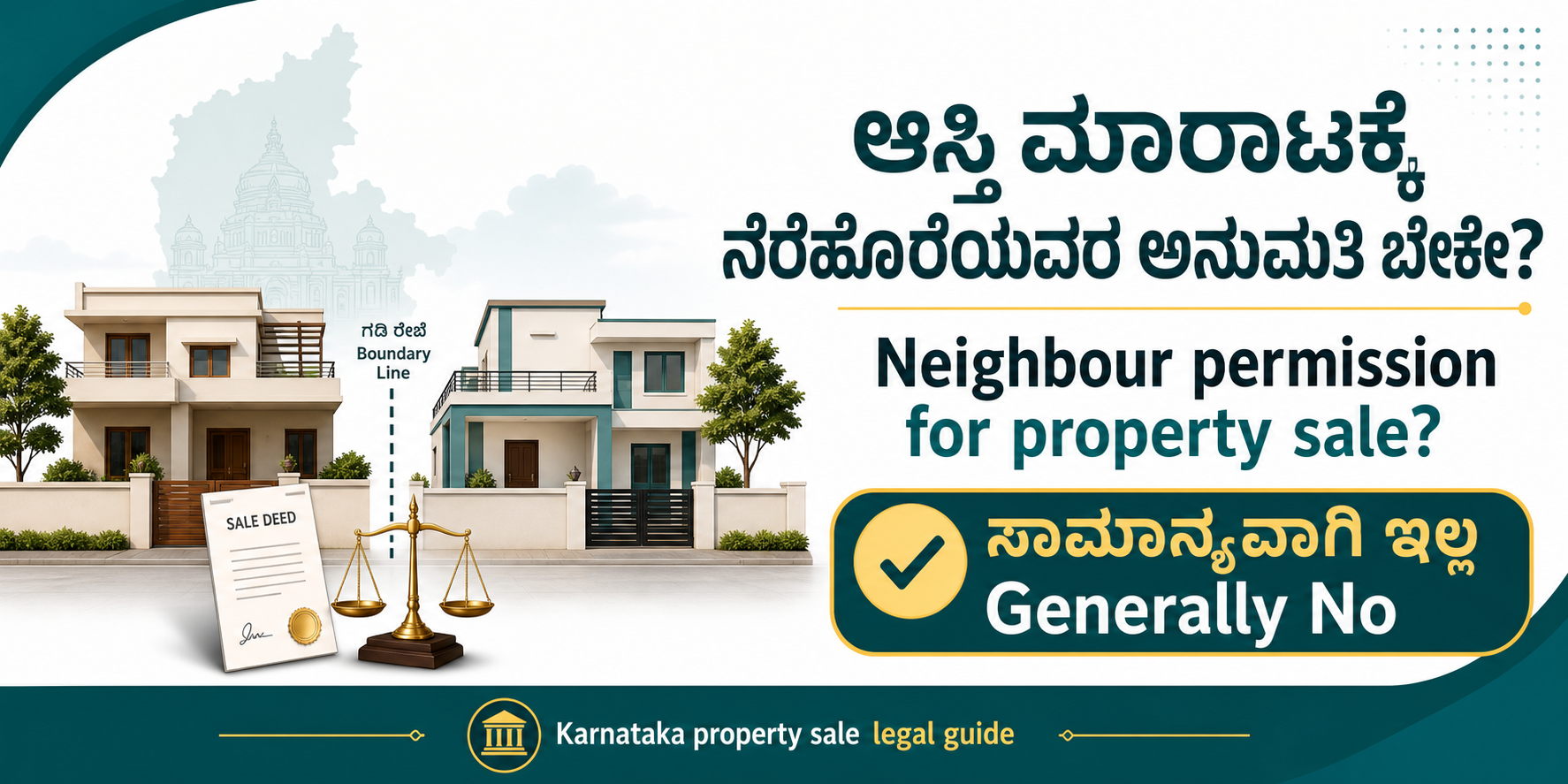
Do You Need to Ask Your Neighbour First While Selling Property in Karnataka? — Legal Clarification
If I want to sell my property situated in Karnataka, there is generally no legal obligation to first offer or sell the property to my neighbour merely because they are the adjacent property owner. A neighbour does not automatically get a “first right to purchase” or “Right of First Refusal / Pre-emption”.
Under Indian law, “pre-emption by vicinage” means claiming first purchase right only because a person owns neighbouring property. Such a claim is generally not recognized as a valid legal right unless it is specifically supported by statute, custom, personal law, or a valid written agreement.
However, special caution is required in the following situations:
1. If the property is fully in your name
If the property is your self-acquired property, purchased by you, and the Sale Deed, Khata, tax-paid receipts, and Encumbrance Certificate are all in your name, and there is no court stay, agreement, mortgage, family claim, or other encumbrance, you may sell the property to a buyer of your choice.
In such a case, a neighbour’s NOC or permission is generally not required.
2. If it is joint property / co-owner property
If the property stands in the name of two or more persons, each co-owner can sell only their lawful share. One co-owner cannot legally sell the entire property without the authority or consent of the other co-owners.
Under Section 44 of the Transfer of Property Act, 1882, a co-owner may transfer their share. However, if an undivided share in a family dwelling house is sold to an outsider, that outsider does not automatically get the right to enter and enjoy joint possession of the house.
3. If it is Hindu joint family / ancestral property
If the property is ancestral property, Hindu Undivided Family property, or joint family property, the rights of all coparceners and legal heirs must be verified before sale.
Under Section 6 of the Hindu Succession Act, 1956, daughters have coparcenary rights equal to sons. Therefore, if joint family property is sold without checking the rights of the father, son, daughter, widow, mother, and other Class-I heirs, future litigation may arise.
4. If it is inherited property — Section 22 of the Hindu Succession Act
If a Hindu person dies without a Will and the property devolves upon Class-I heirs, and one of those heirs wishes to sell their share, the other Class-I heirs may have a preferential right to acquire that share under Section 22 of the Hindu Succession Act, 1956.
This is not a neighbour’s right. It is a statutory right available to family legal heirs in certain inherited property situations.
Therefore, if the property is inherited, the rights of family heirs / co-heirs must be checked before sale.
5. Undivided family dwelling house — Partition Act, 1893
If a shareholder in an undivided family dwelling house sells their share to an outsider, and that outsider files a suit for partition, Section 4 of the Partition Act, 1893 may allow the family shareholders to request the court to purchase the outsider’s share at a court-determined valuation.
This is also not a neighbour’s right. It is a protection given to family members in respect of a family dwelling house.
6. If there is a minor’s share
If a minor child has a share in the property, the guardian cannot sell the minor’s immovable property share at their own discretion. Under the Hindu Minority and Guardianship Act, sale of a minor’s immovable property share generally requires permission from the competent court.
7. If the property is agricultural land — Karnataka law
If the property is agricultural land, the RTC/Pahani, Mutation, Survey Sketch, land use, conversion status, tenancy claim, grant condition, and PTCL issue must be verified.
The records must be proper under the Karnataka Land Reforms Act and the Karnataka Land Revenue Act. Even though the 2020 amendments made agricultural land purchase easier, a neighbour still does not get a first purchase right merely because they are adjacent landowners.
However, if land records are not proper, problems may arise during sale registration or future mutation.
8. If it is SC/ST granted land / PTCL Act issue
If the property was granted by the Government to a person belonging to Scheduled Castes or Scheduled Tribes, the Karnataka Scheduled Castes and Scheduled Tribes (Prohibition of Transfer of Certain Lands) Act, 1978, commonly called the PTCL Act, may apply.
Such granted lands may have sale restrictions, non-alienation conditions, or prior government permission requirements. Before selling such property, the grant certificate and PTCL applicability must be verified.
9. If there is a common passage / easementary right
If the neighbour uses your land as the only access to a public road, they may claim an easementary right under the Easements Act. This is not an ownership right, but it may be a right of access or passage.
If such a right exists, it must be disclosed to the buyer and clearly mentioned in the Sale Deed.
10. If there is a common wall / party wall
In old houses or urban areas, if there is a common wall, shared passage, drainage, setback, or access arrangement, you may still sell the property without neighbour permission. However, the Sale Deed should clearly mention the common wall or shared arrangement to avoid future liability.
11. If the Sale Deed / agreement contains a first refusal clause
If your previous Sale Deed, family settlement, partition deed, development agreement, lease agreement, society bye-laws, or any private agreement gives someone a right of first refusal, then that clause must be followed.
If such a clause is ignored, the buyer or the right-holder may raise a legal dispute.
12. Safe steps before selling
Check the Original Sale Deed and Mother Deed.
Obtain at least a 13-year Encumbrance Certificate.
Update Khata / e-Khata / RTC / Mutation records.
Update tax-paid receipts.
If there is a boundary dispute, obtain a survey sketch.
If it is joint family or inherited property, ask a lawyer whether a legal heir tree, release deed, or consent deed is required.
Publishing a public notice in one Kannada newspaper and one English newspaper is safer.
Disclose common wall, passage, easement, pending dispute, loan, and mortgage details to the buyer.
Add a clause in the Sale Deed stating that the seller is the absolute owner and that there is no third-party pre-emption claim.
Pay proper stamp duty and complete registration as per the Registration Act and Karnataka Stamp Act.
Suggested Sale Deed Clause
“The Vendor is the lawful and absolute owner of the schedule property and has full right, power, title, and authority to sell the same. There is no claim of pre-emption, right of first refusal, mortgage, charge, lien, court stay, encumbrance, co-owner claim, legal heir claim, neighbour claim, or third-party claim over the schedule property. If any such claim arises, the Vendor shall be solely responsible for the same.”
Summary
In Karnataka, there is no general law requiring a property owner to first sell the property to a neighbour merely because they are the adjacent property owner. However, if the property involves joint family rights, inherited property, co-ownership, minor share, agricultural land, granted land, PTCL land, common passage, or easementary rights, proper document verification and legal procedure must be followed before sale.
ಕನ್ನಡ ಆವೃತ್ತಿ
ಕರ್ನಾಟಕದಲ್ಲಿ ಆಸ್ತಿ ಮಾರಾಟ ಮಾಡುವಾಗ ನೆರೆಹೊರೆಯವರಿಗೆ ಮೊದಲು ಕೇಳಬೇಕೇ? — ಕಾನೂನುಬದ್ಧ ಸ್ಪಷ್ಟನೆ
ನಾನು ಕರ್ನಾಟಕದಲ್ಲಿರುವ ನನ್ನ ಆಸ್ತಿಯನ್ನು ಮಾರಾಟ ಮಾಡಲು ಬಯಸಿದರೆ, ಕೇವಲ ನೆರೆಹೊರೆಯವರು ಎಂಬ ಕಾರಣಕ್ಕೆ ಅವರಿಗೆ ಮೊದಲು ಆಸ್ತಿಯನ್ನು ಮಾರಾಟ ಮಾಡುವ ಕಾನೂನುಬದ್ಧ ಕಡ್ಡಾಯ ಸಾಮಾನ್ಯವಾಗಿ ಇಲ್ಲ. ನೆರೆಹೊರೆಯವರಿಗೆ “ಮೊದಲ ಖರೀದಿ ಹಕ್ಕು” ಅಥವಾ “Right of First Refusal / Pre-emption” ಸ್ವಯಂಚಾಲಿತವಾಗಿ ಸಿಗುವುದಿಲ್ಲ.
ಭಾರತೀಯ ಕಾನೂನಿನಲ್ಲಿ “pre-emption by vicinage” ಅಂದರೆ ಕೇವಲ ಪಕ್ಕದ ಆಸ್ತಿ ಮಾಲೀಕನಾಗಿರುವ ಕಾರಣಕ್ಕೆ ಮೊದಲ ಖರೀದಿ ಹಕ್ಕು ಕೇಳುವುದು ಸಾಮಾನ್ಯವಾಗಿ ಮಾನ್ಯವಲ್ಲ. ಸುಪ್ರೀಂ ಕೋರ್ಟ್ ಕೂಡ ಇಂತಹ ಹಕ್ಕು ಆಸ್ತಿ ಮಾಲೀಕರ ಮಾರಾಟ ಸ್ವಾತಂತ್ರ್ಯವನ್ನು ಅನಾವಶ್ಯಕವಾಗಿ ನಿರ್ಬಂಧಿಸುತ್ತದೆ ಎಂದು ಹೇಳಿದೆ.
ಆದರೆ ಕೆಳಗಿನ ಸಂದರ್ಭಗಳಲ್ಲಿ ವಿಶೇಷ ಎಚ್ಚರಿಕೆ ಅಗತ್ಯ:
1. ಆಸ್ತಿ ಸಂಪೂರ್ಣವಾಗಿ ನಿಮ್ಮ ಹೆಸರಿನಲ್ಲಿದ್ದರೆ
ಆಸ್ತಿ ನಿಮ್ಮ ಸ್ವಂತವಾಗಿ ಖರೀದಿಸಿದ self-acquired property ಆಗಿದ್ದು, sale deed, khata, tax receipts, EC ಎಲ್ಲವೂ ನಿಮ್ಮ ಹೆಸರಿನಲ್ಲಿ ಇದ್ದರೆ, ಮತ್ತು ಯಾವುದೇ court stay, agreement, mortgage, family claim ಇಲ್ಲದಿದ್ದರೆ, ನೀವು ನಿಮ್ಮ ಇಷ್ಟದ ಖರೀದಿದಾರರಿಗೆ ಮಾರಾಟ ಮಾಡಬಹುದು. ನೆರೆಹೊರೆಯವರ NOC ಅಥವಾ ಅನುಮತಿ ಸಾಮಾನ್ಯವಾಗಿ ಅಗತ್ಯವಿಲ್ಲ.
2. Joint property / Co-owner property ಆಗಿದ್ದರೆ
ಆಸ್ತಿ ಇಬ್ಬರು ಅಥವಾ ಹೆಚ್ಚು ಜನರ ಹೆಸರಿನಲ್ಲಿ ಇದ್ದರೆ, ಪ್ರತಿಯೊಬ್ಬ co-owner ತಮ್ಮ ಕಾನೂನುಬದ್ಧ share ಅನ್ನು ಮಾತ್ರ ಮಾರಾಟ ಮಾಡಬಹುದು. ಒಬ್ಬ co-owner ಸಂಪೂರ್ಣ ಆಸ್ತಿಯನ್ನು ಇತರ co-owners ಅನುಮತಿಯಿಲ್ಲದೆ ಮಾರಾಟ ಮಾಡಲು ಸಾಧ್ಯವಿಲ್ಲ.
Transfer of Property Act, 1882 ರ Section 44 ಪ್ರಕಾರ co-owner ತನ್ನ share ಅನ್ನು transfer ಮಾಡಬಹುದು. ಆದರೆ dwelling house ಅಂದರೆ ಕುಟುಂಬ ವಾಸದ ಮನೆಯ undivided share ಅನ್ನು outsider ಗೆ ಮಾರಾಟ ಮಾಡಿದರೆ, ಆ outsider ಗೆ ಮನೆಯೊಳಗೆ ಬಂದು joint possession ಪಡೆಯುವ ಹಕ್ಕು ಸ್ವಯಂಚಾಲಿತವಾಗಿ ಸಿಗುವುದಿಲ್ಲ.
3. Hindu joint family / ancestral property ಆಗಿದ್ದರೆ
ಆಸ್ತಿ ancestral property ಅಥವಾ Hindu Undivided Family / joint family property ಆಗಿದ್ದರೆ, ಮಾರಾಟಕ್ಕೂ ಮೊದಲು ಎಲ್ಲಾ coparceners / legal heirs ಹಕ್ಕುಗಳನ್ನು ಪರಿಶೀಲಿಸಬೇಕು.
Hindu Succession Act, 1956 ರ Section 6 ಪ್ರಕಾರ ಮಗಳಿಗೆ ಕೂಡ ಮಗನಂತೆಯೇ coparcenary right ಇದೆ. ಆದ್ದರಿಂದ ತಂದೆ, ಮಗ, ಮಗಳು, ವಿಧವೆ, ತಾಯಿ, ಇತರ Class-I heirs ಅವರ ಹಕ್ಕುಗಳ ಪರಿಶೀಲನೆ ಇಲ್ಲದೆ joint family property ಮಾರಾಟ ಮಾಡಿದರೆ ಮುಂದೆ dispute ಬರುವ ಸಾಧ್ಯತೆ ಇದೆ.
4. Inherited property ಆಗಿದ್ದರೆ — Section 22 Hindu Succession Act
ಒಬ್ಬ ಹಿಂದೂ ವ್ಯಕ್ತಿ ವಿಲ್ ಇಲ್ಲದೆ ಮರಣ ಹೊಂದಿದ ನಂತರ ಆಸ್ತಿ Class-I heirs ಗೆ ಬಂದಿದ್ದರೆ, ಮತ್ತು ಅವರಲ್ಲಿ ಒಬ್ಬರು ತಮ್ಮ share ಮಾರಾಟ ಮಾಡಲು ಬಯಸಿದರೆ, ಇತರ Class-I heirs ಗೆ ಆ share ಖರೀದಿಸಲು preferential right ಇರಬಹುದು. ಇದು ನೆರೆಹೊರೆಯವರ ಹಕ್ಕು ಅಲ್ಲ; ಇದು ಕುಟುಂಬದ legal heirs ಹಕ್ಕು.
ಅಂದರೆ, property inherited ಆಗಿದ್ದರೆ ಮೊದಲು family heirs / co-heirs ಹಕ್ಕುಗಳನ್ನು ಪರಿಶೀಲಿಸುವುದು ಮುಖ್ಯ.
5. Undivided family dwelling house — Partition Act, 1893
Undivided family dwelling house ನಲ್ಲಿ ಒಬ್ಬ share-holder ತನ್ನ share ಅನ್ನು outsider ಗೆ ಮಾರಾಟ ಮಾಡಿದರೆ, ಮತ್ತು ಆ outsider partition suit ಹಾಕಿದರೆ, Partition Act, 1893 ರ Section 4 ಪ್ರಕಾರ ಕುಟುಂಬದ shareholder ಗಳು ಆ outsider share ಅನ್ನು court valuation ಪ್ರಕಾರ ಖರೀದಿಸಲು ಕೇಳಬಹುದು.
ಇದು ಕೂಡ ನೆರೆಹೊರೆಯವರ ಹಕ್ಕು ಅಲ್ಲ; ಇದು ಕುಟುಂಬದ ಸದಸ್ಯರ ರಕ್ಷಣೆಗೆ ಇರುವ ಕಾನೂನು.
6. Minor share ಇದ್ದರೆ
ಆಸ್ತಿಯಲ್ಲಿ minor ಮಗುವಿನ share ಇದ್ದರೆ, guardian ತನ್ನ ಇಷ್ಟಕ್ಕೆ ಆ share ಮಾರಾಟ ಮಾಡಲು ಸಾಧ್ಯವಿಲ್ಲ. Hindu Minority and Guardianship Act ಪ್ರಕಾರ minor immovable property share ಮಾರಾಟಕ್ಕೆ ಸಾಮಾನ್ಯವಾಗಿ competent court permission ಬೇಕಾಗುತ್ತದೆ.
7. Agricultural land ಆಗಿದ್ದರೆ — Karnataka law
ಆಸ್ತಿ ಕೃಷಿ ಜಮೀನು ಆಗಿದ್ದರೆ RTC/Pahani, Mutation, Survey sketch, land use, conversion status, tenancy claim, grant condition, PTCL issue ಇತ್ಯಾದಿಗಳನ್ನು ಪರಿಶೀಲಿಸಬೇಕು.
Karnataka Land Reforms Act ಮತ್ತು Karnataka Land Revenue Act ಅಡಿಯಲ್ಲಿ ದಾಖಲೆಗಳು ಸರಿಯಾಗಿರಬೇಕು. 2020 ನಂತರ ಕೃಷಿ ಜಮೀನು ಖರೀದಿ ನಿಯಮಗಳು ಸಡಿಲವಾಗಿದ್ದರೂ, ನೆರೆಹೊರೆಯವರಿಗೆ ಮೊದಲ ಖರೀದಿ ಹಕ್ಕು ಸಿಗುವುದಿಲ್ಲ. ಆದರೆ land records ಸರಿಯಾಗಿರದಿದ್ದರೆ sale registration ಅಥವಾ future mutation ನಲ್ಲಿ ಸಮಸ್ಯೆ ಬರಬಹುದು.
8. SC/ST granted land / PTCL Act issue ಇದ್ದರೆ
ಆಸ್ತಿ ಸರ್ಕಾರದಿಂದ SC/ST ವ್ಯಕ್ತಿಗೆ grant ಆಗಿರುವ land ಆಗಿದ್ದರೆ, Karnataka Scheduled Castes and Scheduled Tribes (Prohibition of Transfer of Certain Lands) Act, 1978 ಅಂದರೆ PTCL Act ಅನ್ವಯಿಸಬಹುದು. ಇಂತಹ granted land ನಲ್ಲಿ sale restriction, non-alienation condition, government permission issue ಇರಬಹುದು. ಇಂತಹ ಆಸ್ತಿಯನ್ನು ಮಾರಾಟ ಮಾಡುವ ಮೊದಲು grant certificate ಮತ್ತು PTCL applicability ಖಚಿತವಾಗಿ ಪರಿಶೀಲಿಸಬೇಕು.
9. Common passage / Easement right ಇದ್ದರೆ
ನೆರೆಹೊರೆಯವರು ನಿಮ್ಮ ಜಮೀನಿನ ಮೂಲಕ ಮಾತ್ರ ರಸ್ತೆ ಪ್ರವೇಶ ಪಡೆಯುತ್ತಿದ್ದರೆ, Easements Act ಅಡಿಯಲ್ಲಿ easementary right claim ಮಾಡಬಹುದು. ಇದು ownership right ಅಲ್ಲ, ಆದರೆ passage/access right ಆಗಿರಬಹುದು. ಇಂತಹ right ಇದ್ದರೆ buyer ಗೆ disclosure ಮಾಡಬೇಕು ಮತ್ತು sale deed ನಲ್ಲಿ ಸ್ಪಷ್ಟವಾಗಿ mention ಮಾಡಬೇಕು.
10. Common wall / party wall ಇದ್ದರೆ
ಹಳೆಯ ಮನೆಗಳು ಅಥವಾ ನಗರ ಪ್ರದೇಶಗಳಲ್ಲಿ common wall ಇದ್ದರೆ, ನೆರೆಹೊರೆಯವರ ಅನುಮತಿ ಇಲ್ಲದೆ sale ಮಾಡಬಹುದು. ಆದರೆ sale deed ನಲ್ಲಿ common wall, shared passage, drainage, setback, access ಇತ್ಯಾದಿ ವಿಷಯಗಳನ್ನು ಸರಿಯಾಗಿ mention ಮಾಡುವುದು ಉತ್ತಮ.
11. Sale deed / agreement ನಲ್ಲಿ first refusal clause ಇದ್ದರೆ
ನಿಮ್ಮ ಹಿಂದಿನ sale deed, family settlement, partition deed, development agreement, lease agreement, society bye-laws ಅಥವಾ private agreement ನಲ್ಲಿ ಯಾರಿಗಾದರೂ first refusal right ನೀಡಿದ್ದರೆ, ಅದನ್ನು ಪಾಲಿಸಬೇಕು. ಇಲ್ಲದಿದ್ದರೆ buyer ಅಥವಾ right holder dispute ಮಾಡಬಹುದು.
12. ಮಾರಾಟಕ್ಕೂ ಮೊದಲು ಸುರಕ್ಷಿತ ಕ್ರಮಗಳು
-
Original Sale Deed ಮತ್ತು Mother Deed ಪರಿಶೀಲಿಸಿ.
-
ಕನಿಷ್ಠ 13 ವರ್ಷಗಳ Encumbrance Certificate ಪಡೆಯಿರಿ.
-
Khata / e-Khata / RTC / Mutation records ಸರಿಪಡಿಸಿ.
-
Tax paid receipts update ಮಾಡಿ.
-
Boundary dispute ಇದ್ದರೆ survey sketch ಮಾಡಿಸಿ.
-
Joint family ಅಥವಾ inherited property ಆಗಿದ್ದರೆ legal heir tree ಮತ್ತು release deed / consent deed ಬೇಕೇ ಎಂದು ವಕೀಲರಿಂದ ಪರಿಶೀಲಿಸಿ.
-
Public notice ಅನ್ನು ಒಂದು ಕನ್ನಡ ಮತ್ತು ಒಂದು ಇಂಗ್ಲಿಷ್ ಪತ್ರಿಕೆಯಲ್ಲಿ ಪ್ರಕಟಿಸುವುದು ಸುರಕ್ಷಿತ.
-
Buyer ಗೆ common wall, passage, easement, pending dispute, loan, mortgage ಎಲ್ಲವನ್ನೂ disclose ಮಾಡಿ.
-
Sale deed ನಲ್ಲಿ seller absolute owner ಎಂದು ಮತ್ತು third-party pre-emption claim ಇಲ್ಲ ಎಂದು clause ಸೇರಿಸಿ.
-
Registration Act, Karnataka Stamp Act ಪ್ರಕಾರ ಸರಿಯಾದ stamp duty ಮತ್ತು registration ಮಾಡಿಸಿ.
Sale Deed ನಲ್ಲಿ ಸೇರಿಸಬಹುದಾದ clause
“ಮಾರಾಟಗಾರರು ಮೇಲ್ಕಂಡ ಆಸ್ತಿಯ ಕಾನೂನುಬದ್ಧ ಮತ್ತು ಸಂಪೂರ್ಣ ಮಾಲೀಕರಾಗಿದ್ದು, ಅವರಿಗೆ ಈ ಆಸ್ತಿಯನ್ನು ಮಾರಾಟ ಮಾಡುವ ಪೂರ್ಣ ಹಕ್ಕು, ಅಧಿಕಾರ ಮತ್ತು ಸ್ವಾಮ್ಯವಿದೆ. ಈ ಆಸ್ತಿಯ ಮೇಲೆ ಯಾವುದೇ ನೆರೆಹೊರೆಯವರು, ಮೂರನೇ ವ್ಯಕ್ತಿ, co-owner, legal heir ಅಥವಾ ಇತರ ವ್ಯಕ್ತಿಗಳಿಂದ pre-emption, right of first refusal, mortgage, charge, lien, court stay ಅಥವಾ encumbrance ಇರುವುದಿಲ್ಲ. ಇದ್ದಲ್ಲಿ ಅದರ ಸಂಪೂರ್ಣ ಹೊಣೆಗಾರಿಕೆ ಮಾರಾಟಗಾರರದೇ ಆಗಿರುತ್ತದೆ.”
ಸಾರಾಂಶ
ಕರ್ನಾಟಕದಲ್ಲಿ ಕೇವಲ ನೆರೆಹೊರೆಯವರು ಎಂಬ ಕಾರಣಕ್ಕೆ ಅವರಿಗೆ ಮೊದಲು ಆಸ್ತಿ ಮಾರಾಟ ಮಾಡಬೇಕಾದ ಕಾನೂನು ಇಲ್ಲ. ಆದರೆ ಆಸ್ತಿ joint family property, inherited property, co-owner property, minor share, agricultural land, granted land, PTCL land, common passage ಅಥವಾ easement issue ಹೊಂದಿದ್ದರೆ, ಮಾರಾಟಕ್ಕೂ ಮೊದಲು ದಾಖಲೆಗಳನ್ನು ಸರಿಯಾಗಿ ಪರಿಶೀಲಿಸಿ ಕಾನೂನು ಕ್ರಮ ಅನುಸರಿಸಬೇಕು.